
From Recovery to Resilience:
How Emporia Is Rethinking
Economic Development
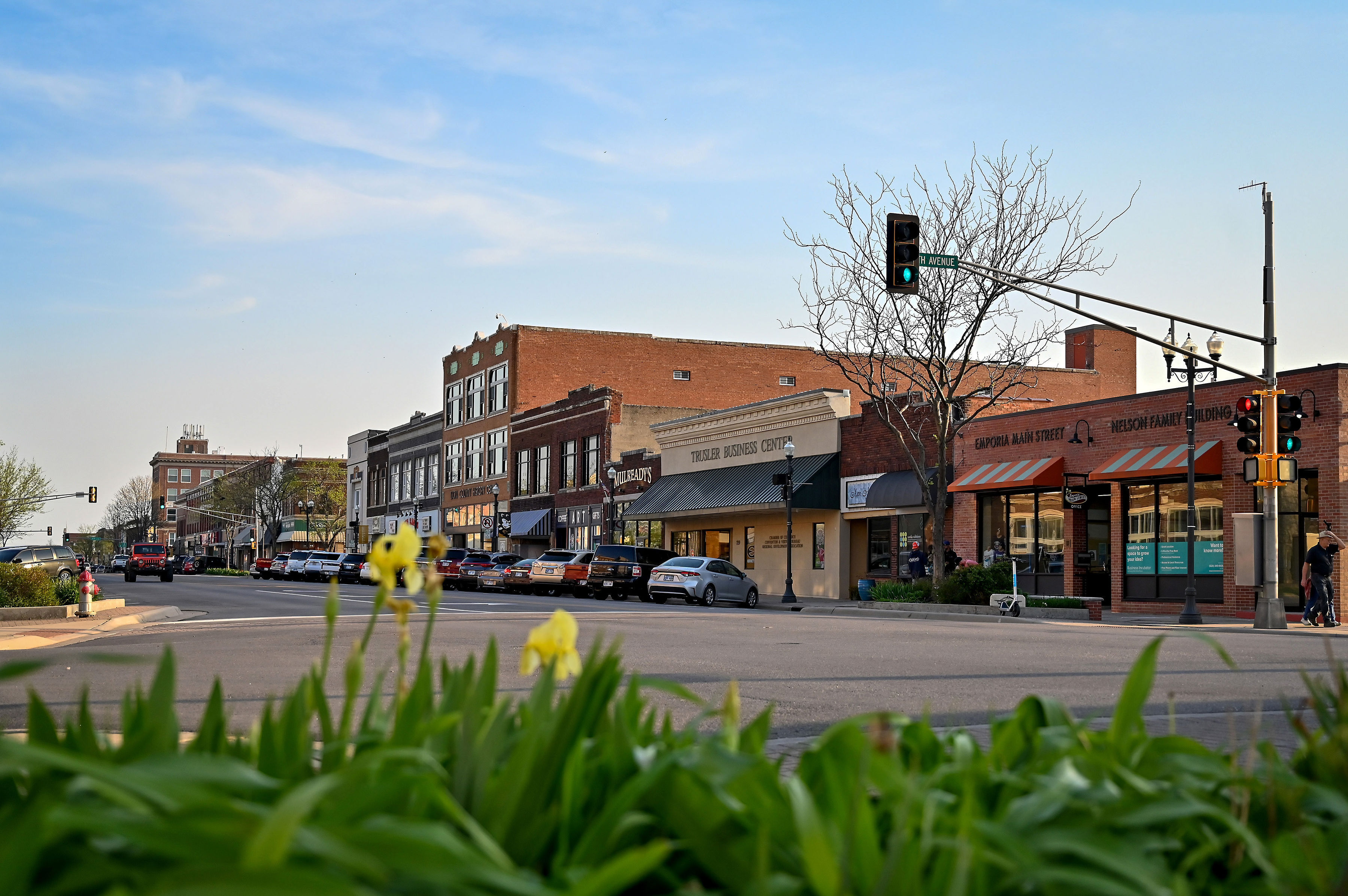
In both its name and history, Emporia, Kansas, has commerce at its core. Founded as a business venture in 1857, the city took its name from the Greek emporion, meaning "market". As Emporia grew, its economic role expanded beyond its boundaries. The arrival of two railroads in 1869 and 1870 connected Emporia to broader markets, and the city became a regional trading center serving the surrounding agricultural economy.
That role continued to evolve as the American economy changed. For much of the 20th century, manufacturing became a defining engine of economic growth across America. It allowed rural communities like Emporia to connect local workers to markets beyond the region, bringing outside dollars in through wages, supplier purchases, and investment.
Emporia increasingly built its economy around manufacturing, developing the infrastructure, workforce, and institutional expertise needed to support major employers. By the mid-1990s, manufacturing had become a significant strength of the local economy. During this period, Lyon County, where Emporia is located, saw more than 2,800 jobs added to its economy, and manufacturing jobs accounted for nearly 40% of that growth.
Then the conditions that had supported this model began to change. Because of the historical dominance of its industrial sector, Emporia was acutely affected by several large manufacturing closures over the past two decades, one of which coincided with the Great Recession.
A Manufacturing Advantage
U.S. manufacturing jobs peaked in the late 1970s and declined from the early 2000s even as output rose. Globalization, automation, and consolidation meant fewer workers and plants could produce more.
Yet at this point, Emporia was following a distinct trend from the nation. Beginning in the 1990s, local leaders developed a coordinated strategy for attracting and expanding large employers. The Regional Development Association (RDA) of East Central Kansas was established, voters approved a half-cent sales tax for industrial development, and the community invested heavily in industrial land, transportation, and utilities needed to support major manufacturing operations.
As rates of manufacturing employment began to decline nationally, Emporia stayed well above its 1990 share, indicating continued reliance on, and success from, this industry. Its success was not only apparent within this industry—overall employment in Emporia was also growing.
Source: CORI analysis of U.S. Bureau of Labor Statistics and Federal Reserve sourced via FRED.
The Bottom Falls Out
During this time, Main Street revitalization, small-business support, higher education, workforce development, philanthropy, and quality-of-life improvements also strengthened the environment surrounding Emporia's manufacturing economy.
By the mid-2000s, the community had genuine industrial advantages: physical infrastructure, workforce experience, institutional expertise, industry relationships, and a demonstrated ability to attract and expand major employers.
Continued investment in manufacturing was an economically reasonable strategy based on the economic prosperity seen through the 1990s. The vulnerability in that strategy became visible only when the conditions supporting it changed.
In 2008, Tyson Foods closed its Emporia beef-processing plant, eliminating approximately 1,500 jobs at the same time the U.S. entered the Great Recession. The closure exposed the limits of Emporia's long-standing industrial infrastructure. The factors that had once made Emporia a strong location for meat processing, including its transportation connections, workforce, industry relationships, and proximity to the regional cattle supply, had changed as cattle production increasingly shifted west. The manufacturing employment gains seen through the 1990s were undone by the closure of a single manufacturing plant, showing just how vulnerable this economic development strategy was to outside forces.
Either the plant closure or the recession alone would have represented a significant disruption. Together, they placed extraordinary pressure on a local economy in which manufacturing dominated, and the combined loss more than erased the employment gains of the 1990s.
The initial loss of industrial employment rippled through the broader labor market and placed additional pressure on workers and households. For those unable to find comparable employment locally, leaving the community became the next-best option, contributing to increased out-migration.
Between 2007 and 2012, Emporia's population dropped by 2,568 people. Each departing household took with it workers and their productivity, as well as spending that supported businesses and services throughout the local economy.
Source: CORI analysis of U.S. Bureau of Labor Statistics, Quarterly Census of Employment and Wages.
Emporia was not alone in its economic decline. Many communities similarly dependent on manufacturing were hit hard by the Great Recession. Comparing Emporia with peers that shared similar economic characteristics helps separate the effects of broader structural disruption from what was distinct about Emporia's trajectory. Rural manufacturing-dependent communities were disproportionately affected, putting places like Emporia in a wider regional context.
Hover over a county to see how it was affected.
To place Emporia's experience within a broader rural context, the analysis identified peer counties with similar economic characteristics—particularly strong dependence on manufacturing and comparable pre-recession conditions. These peer counties are presented as a collected average, providing both a benchmark for comparison and anonymity for individual communities. The data reveal a challenge shared across manufacturing-dependent rural economies: Both Emporia and its peers experienced substantial manufacturing employment losses as the Great Recession intensified sector-wide pressures. Importantly, those losses persisted beyond the recession's official end, with manufacturing employment continuing to decline through 2012. The trend illustrates how national economic pressures created prolonged consequences for rural communities concentrated in a single industry.
Source: CORI analysis of U.S. Bureau of Labor Statistics, Quarterly Census of Employment and Wages. 2
As the national economy recovered, Emporia rebuilt a portion of its manufacturing employment. Existing firms expanded, new investments followed, and the community continued relying on the industrial assets and economic development capacity established previously. While some manufacturing employment returned, trends suggested that manufacturing activity had become concentrated among fewer, larger operations.
This distinction matters. Restoring manufacturing jobs replenished a major source of employment and external revenue, but concentration among fewer firms increased risks associated with the loss of a single employer.
This left Emporia with a more complicated economic development challenge than simply rebuilding the employment lost during the downturn. The community had clear strengths and historic reasons to continue investing in manufacturing. And while new employers and expansions brought jobs and investment back into the community, they did not eliminate the risk the Tyson closure had exposed. With so much employment still concentrated among a handful of large employers and industries, another major loss could have an outsized impact.
Although many rural communities confronted the same pressures during the Great Recession, Emporia remained more concentrated in manufacturing than most of its peers afterward. By the end of the 2010s, Emporia had demonstrated that its economy could recover somewhat by drawing on its previously developed economic strategies. What was also clear, though, was that future growth would require expanding the range of firms, occupations, and industries to create a broader economic base that could reduce the risk of additional economic "busts."
We're going to have to diversify because nobody's coming.
The question, then, was whether Emporia could build additional economic lanes alongside its manufacturing strength. In doing so, the community could preserve its industrial advantages while capturing new opportunities emerging from an increasingly knowledge- and innovation-driven economy. Interviews with a select group of Emporians suggested that many have abandoned the idea that another large employer will come to Emporia and save its economy, while noting the need for diversification.

Nobody's Coming to Save Us
In the second half of the 2010s, Emporia began focusing on broadening its economy, building on existing community assets and institutional capacity. Investments in entrepreneurship, higher education, workforce development, downtown revitalization, and digital connectivity had developed alongside Emporia's industrial economy, each responding to different community needs and opportunities. Taken together, these investments expanded the types of businesses, workers, and economic activity the community was increasingly positioned to support.
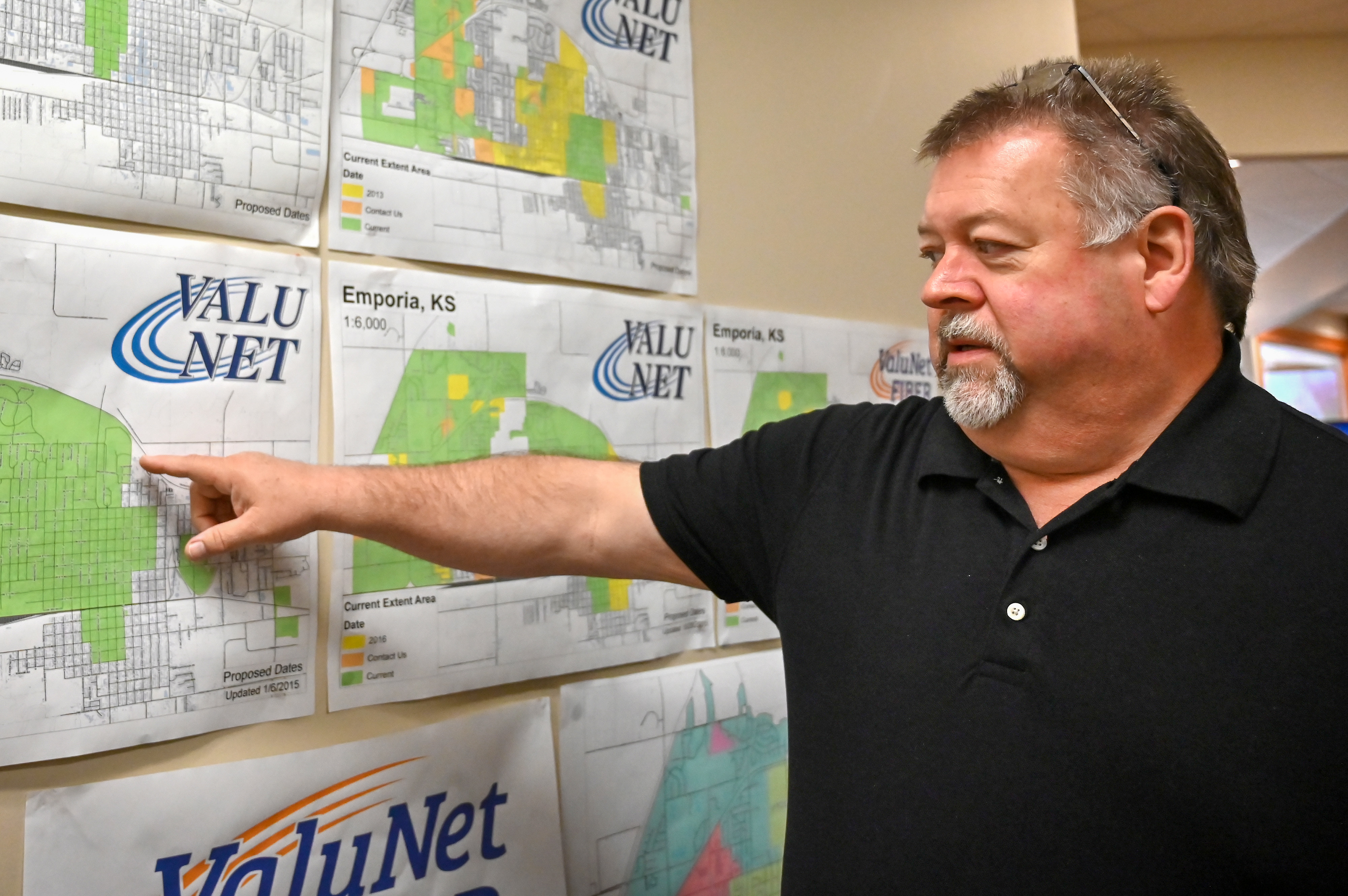
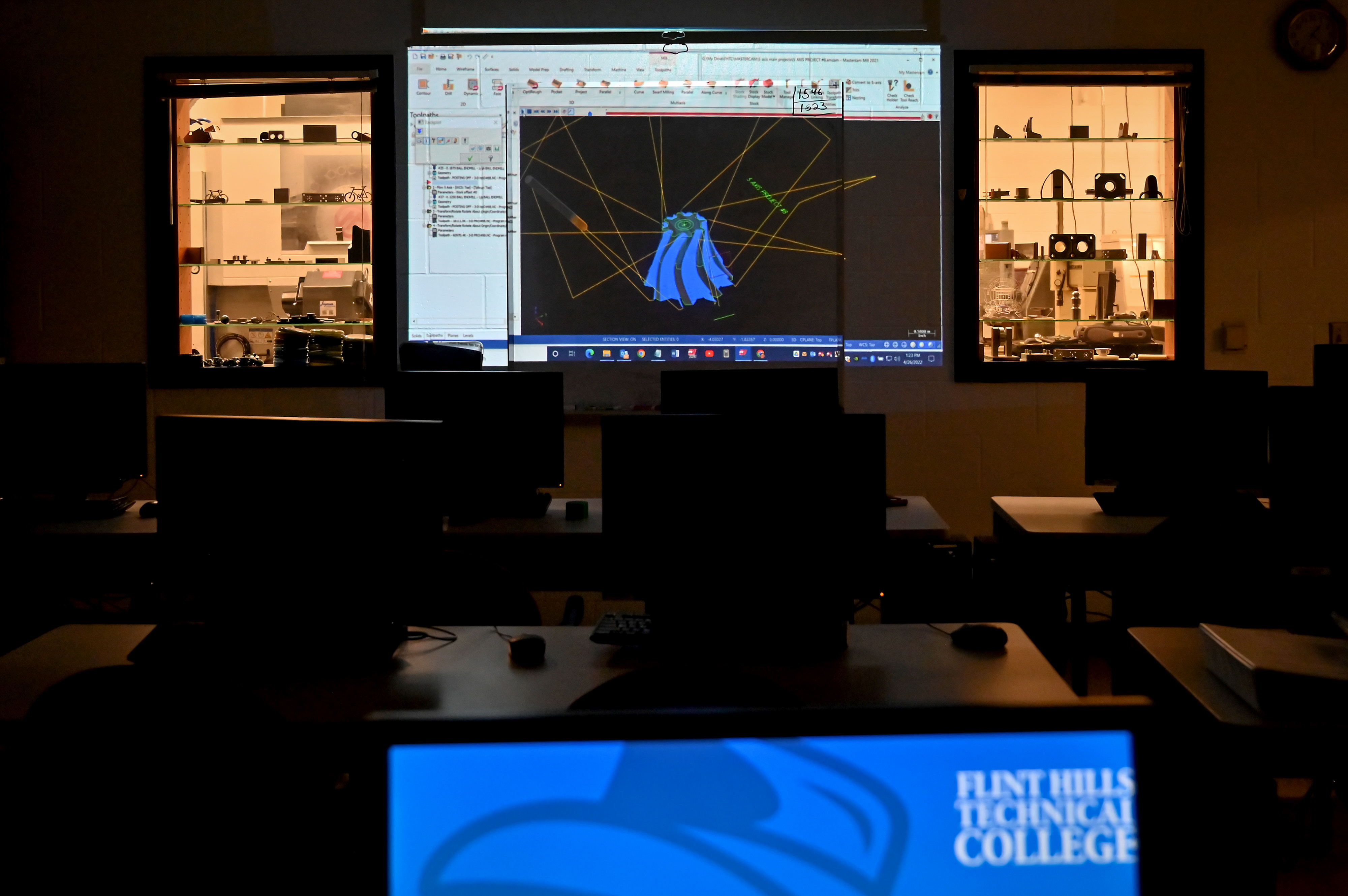
Emporia Main Street had developed significant capacity around small-business formation and downtown development. Emporia State University and Flint Hills Technical College provided higher education and technical training that added depth to the community's workforce and institutional base relative to its size. Local schools and workforce organizations invested in STEM education and career preparation, while strong broadband and fiber infrastructure expanded the ability of workers and firms to reach employers, customers, and markets beyond the region.
Source: CORI analysis of FCC National Broadband Map (December 2025 release).
In 2019, Emporia and CORI began building a strategy through an Economic Development Administration i6/Build to Scale grant proposal. The effort envisioned an innovation hub, expanded fabrication capacity, proof-of-concept funding, mentorship, and stronger connections among entrepreneurs, manufacturers, higher education, and community organizations. Although the proposal did not receive federal funding, the planning process helped coordinate and clarify both the assets Emporia could build upon and the gaps that would need to be addressed. Subsequent assessment work identified strong broadband access, educational institutions, entrepreneurship programming, coworking and maker capacity, and civic collaboration as existing strengths, while highlighting continued needs in scalable-startup support, technology programming, inclusion, and awareness of technology careers.
The Build to Scale planning process highlighted deficiencies in the local ecosystem.
Emporia's response took shape through a series of smaller investments that began to put this strategy into practice. Makerspace and fabrication capacity expanded the physical infrastructure available to entrepreneurs, while technology-focused programming created new opportunities for residents to develop and test scalable business ideas. Digital-skilling and workforce initiatives addressed the labor side of the strategy, and stronger connections among economic development organizations, higher education, and other community partners increased the capacity to support entrepreneurs as they moved from an initial idea toward business formation. The E-Tech Startups bootcamp became one of the clearest examples of this approach, providing a structured pathway for entrepreneurs seeking to develop ventures capable of reaching customers beyond the local market. Emporia reports that two technology businesses have subsequently launched out of the program. Some interviewees expressed hope around technology as a path forward.
What has staying power, it's the technology industry ... we need to broaden our horizons a little bit ... more tech or more tech-related jobs.
The share of tech-intensive businesses in Emporia has grown notably since 2019 and is now ahead of the peer average.
Source: CORI analysis of Lightcast data. 3
Early Signs of Economic Expansion
These early outcomes remain modest relative to the scale of Emporia's economy, but their importance extends beyond the number of businesses created to date. Building a more diversified economy requires the community to develop a repeatable process through which entrepreneurs can identify opportunities, acquire the skills and support needed to pursue them, form businesses, and eventually reach markets beyond Emporia. The infrastructure and programming developed during this period began to establish that process. Unlike the recruitment of a major industrial employer, where a single investment can introduce hundreds of jobs at once, locally driven technology-based development builds gradually as entrepreneurs, businesses, and skilled workers accumulate over time.
One way to measure an economy's diversification is to look at the sectors its jobs fall into: tradable goods, such as natural resource extraction, large-scale agriculture, and manufacturing; tradable services, such as banking, finance, consulting, tourism, and technology; and local services. The average rural share of tradable-goods employment is much higher than the nonrural share, leaving rural economies concentrated in fewer types of jobs. Increasing the share of tradable-service jobs can help offset this concentration. Diversification cannot prevent closures or industry downturns, but it can reduce how much of the community's economy is at risk when they occur.
In Emporia, jobs remain concentrated in local services and tradable goods, and movements in the two have so far tended to offset each other.
Source: CORI analysis of U.S. Bureau of Labor Statistics, Quarterly Census of Employment and Wages.
At first glance, it can be hard to see evidence of progress. But average wages for these sectors tell a different story.
When businesses sell goods or services outside the region, they bring outside dollars into the community. Those dollars can then circulate through wages, local spending, suppliers, and investment, creating economic activity beyond the jobs and income generated directly by those businesses. Economists refer to these subsequent rounds of economic activity as the multiplier effect.
Tradable services create another way to bring outside income into a community. A local software company can serve customers across the country, a professional-services firm can work with clients elsewhere, and a resident can work remotely for an employer outside the region while spending those wages locally. Research has shown that growth in tradable-sector employment, particularly in skilled and high-technology industries, can have an outsized effect on local employment by raising demand for locally produced goods and services.4 The opportunity is not for rural communities to replace manufacturing, but to broaden the number and types of businesses participating in external markets—making the economy more diverse and, over time, more resilient.
For the first time in the past two decades, tradable-services wages have outpaced tradable-goods wages in Emporia.
Tradable-services wages have not only surpassed tradable-goods wages in absolute terms; they are also the fastest growing.
Source: CORI analysis of U.S. Bureau of Labor Statistics, Quarterly Census of Employment and Wages.
The share of tech jobs, which fall under tradable services, has also increased in Emporia (0.5% to 1.2% from 2019 to 2024), although it remains below the state average of 3.2%. Across Emporia, the state, and the nation, average wages for tech jobs greatly outpace the average for all jobs.
Source: CORI analysis of Lightcast data. 5
Although still small, the share of remote workers has increased in Emporia post-COVID.
Looking at only tradable-services workers, the share increases more than fivefold.
Source: CORI analysis of U.S. Census Bureau American Community Survey 5-year estimates (B08006). 6
Emporia's diversification efforts to date support this shift. Individually, these activities may appear small when compared with the employment and revenue associated with a major manufacturing win; the true economic shift becomes clear only as they accumulate over time. Emporia interviewees recognized this, and some rejected the conventional economic development goal of "transformative" initiatives with big impact. One interviewee noted the importance of recognizing small wins.
It's singles. It's not home runs or grand slams.
Manufacturing remains one of the community's greatest economic strengths, built through decades of investment in infrastructure, workforce, relationships, and expertise. But the Great Recession and the Tyson closure demonstrated the risk of having too much of a community's employment and income dependent on a relatively small number of industries and employers that are not locally owned.
The opportunity now is to build alongside that strength. Entrepreneurship, technology, professional services, remote work, and other tradable activities can create additional ways for Emporia's workers and businesses to reach markets beyond the region. Some of those opportunities can grow directly from the manufacturing base itself, while others can create entirely new sources of jobs and outside income. Early signs suggest that diversification is beginning, but like all economic development, building these new sources of growth will take sustained effort over time.
The next phase will depend on how these community-wide strengths and assets evolve and work together. Emporia's next chapter won't be built around one big bet. It will be built through many smaller opportunities — new businesses, new skills, new connections, and new ways to bring income into the community. Main Street, Emporia State University, Flint Hills Technical College, economic development organizations, employers, and other local and regional partners each have a role to play in continuing the community's diversification and modernization. While Main Street has been a significant driver of this work, building a more diverse and resilient economy will require collective commitment and action across the community. Long-term progress will depend on partners across the ecosystem taking ownership of the roles they are best positioned to play. Emporia's strategy isn't to replace what works. It's to build a stronger, more resilient economy alongside it.
Data Methodology
Data for Emporia are represented by Lyon County. Emporia is the county seat and accounts for the majority of the county's population.
The shaded area indicates the Great Recession (2007–2009) and Tyson closure (2008).
- Manufacturing-dependent counties defined by USDA, Economic Research Service 2004 County Typology. "Rural" refers to the 2023 nonmetro definition, which includes all nonmetro counties.
- The analysis identified peer counties with similar economic characteristics—particularly strong dependence on manufacturing and comparable pre-recession conditions. These peer counties are presented as a collected average, providing both a benchmark for comparison and anonymity for individual communities.
- Tech businesses are defined as places of work where tech jobs make up more than twice the national average of tech employment within the industry.
- Enrico Moretti, "Local Multipliers," American Economic Review: Papers & Proceedings 100 (May 2010): 1–7, https://eml.berkeley.edu/~moretti/multipliers.pdf.
- Peer Average = simple mean of four peer county medians. Tech jobs are defined as Computer & Mathematical (SOC 15-).
- Peer Average = population-weighted mean of four peer counties.
- Peer Average = population-weighted mean of four peer counties. Three industries are: Finance and insurance, and real estate and rental and leasing; Professional, scientific, and management, and administrative and waste management services; and Information.